 Version française
 I would like to invite you with this article to create mind maps as naturally as possible. Looking at the beauty of nature, I discovered some elements that were shaped like mind maps. Is it a coincidence that some of the rules of mind mapping correspond with some of the laws of nature? Let me share with you a nice story about mind mapping in the nature.I would like to invite you with this article to create mind maps as naturally as possible. I’m hearing a lot about the creation process which is sometimes painful, with constraints that are not always understood or mastered. The reason why there is no section on this website about the rules is because I’m still investigating the reasoning and the limits behind each. We are facing constrains every minutes of our life in everything we are doing. On computers, we do not choose how we do things, we do the way the software tells us to do. The natural way to realize things do not mean much anymore. In mind mapping, some of the rules that may block you are in fact an invitation to escape from the conventional or framed way of thinking. Bash some educational barriers and behave more naturally, in harmony with your mind and the Nature. Look for freedom in your actions and decisions. Do not care too much about what others say about your maps. You will find mind mapping easier and pleasant, and therefore, more efficient.
In that context, let me tell you this nice story. Some days ago, I was enjoying a peaceful rest in my garden and I was appreciating the beauty of nature. I noticed that the dead tree was a bit like a piece of a mind map. A bit later, I saw a couple of weed roots which were also looking like mind maps. Looking for more of them, I found another one on a leaf of a tree ... It immediately made me think about this nice chat I had with Jean-Pascal CÔTE, one of my French peers in the mind mapping domain. Thanks to him, I discovered the notion of biomimicry or biomimetics. This is the examination of Nature, its models, systems, processes, and elements to emulate or take inspiration from in order to solve human problems (source Wikipedia). It’s really an interesting domain.
I was inspired by the topic and the relation I could established between some elements in the nature and the format of mind maps. I decided to create some representative examples that would illustrate my discovery. I took some photos that I used for drawing what I could call “natural” mind maps. In fact, I did not draw anything. I just put words on branches that were appearing naturally on my pictures. Here they are.
 |
| Mind map in the nature - Root example |
 |
| Mind map in the nature - Leaf example |
 |
| Mind map in the nature - Tree example |
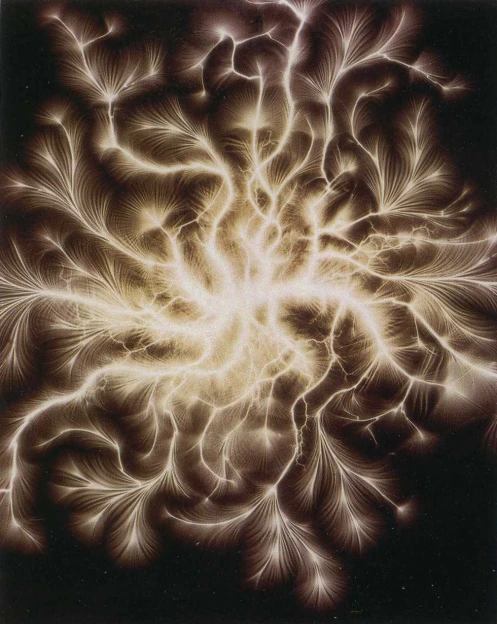
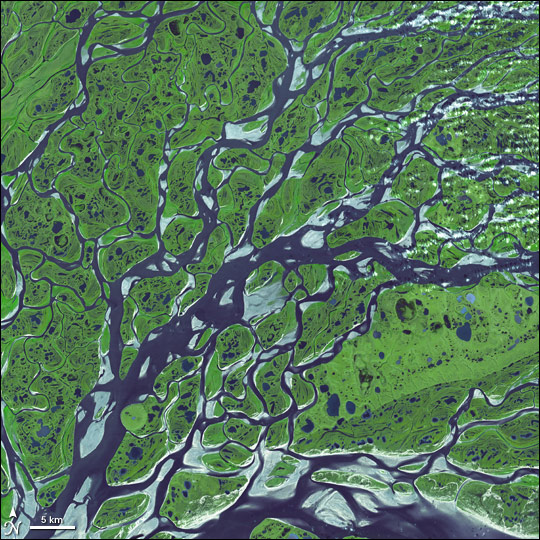
- There is a clear origin: there is a starting point where all the energy is concentrated. It is not necessary located in the centre but it is definitely a root element from where other elements escape.
- Branches radiate: there is a clear first level of main branches (thickest) radiating from and around the origin (even if it is not always at 360 degree).
- Branches have sub-branches: there is a natural hierarchy structure that comes out from the element, with sub-branches appearing increasingly thin.
- There is no broken line: from the start to the deepest part of the element, everything is connected and creates a flow of energy.
- Branches are curved: don’t look for a straight line in the nature, you will not find any. Do you want to bet? There is not a single straight line on earth that has not been manufactured by the human race.
- The space is infinite: there is a vast space the nature can use to grow and expand.
|
||||



Practically, if you want to add text on a nature mind map (e.g. an out-of-the-box creative presentations), you can use iMindMap, the mind map software tool. First import the image in the background. Then you can draw your mind map on top. Make sure you are using 3 different colours: one for the background, one for the branches (same for all) and one for the text font. Once your mind map is finish, remove the background image. The last step consists in taking a screenshot of your mind map and extracting the branch texts. You can achieve that with an image editor (e.g. GIMP) using the "select by colour" magic wand and copy the selection in the clipboard. Finally, you can superpose your text image over the background image in your presentation. Hope you have been inspired.
Be open-minded!
Be creative!
Be open-minded!
Be creative!


